How Christmas Lights Are Made: Inside Our Complete Manufacturing Process
Jul 31, 2026
Behind every box of decorative lights our clients receive is a complete production process. From raw material intake to finished goods shipment, every step along the way ultimately reflects in the quality of the product.
Raw Materials – It Starts with Material Selection
The first step of every production run is confirming that all materials are in place. LEJIN's core materials include pure rubber wire, copper wire, LED chips, PVC materials, and more. Each batch of incoming materials undergoes incoming inspection – checking whether copper wire diameter meets specifications, whether rubber wire complies with standards, and whether LED brightness and color temperature are consistent. Only materials that pass inspection enter the production line, eliminating quality risks at the source.
LED Soldering and Light Source Module Processing
This is the core step that determines the lifespan and stability of the lights. LED chips are soldered onto circuit boards or string light wires – the soldering process directly affects conductivity and heat dissipation performance. After soldering, each light board or string section undergoes a power-on test to confirm all LEDs are lit, with no dead LEDs or flickering, before moving to the next step.
Assembly – Turning Components into Complete Lights
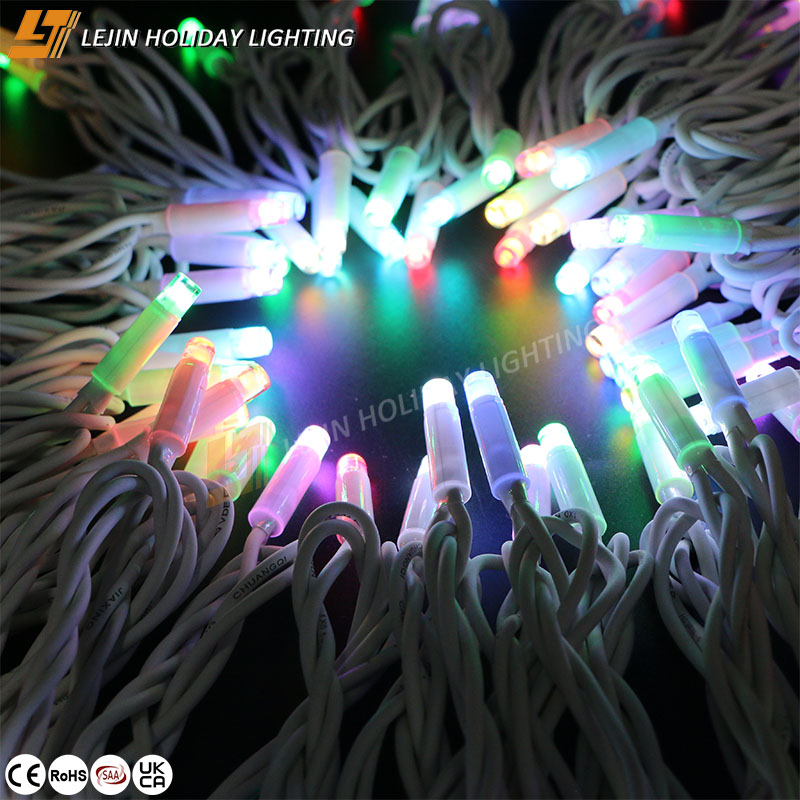
The assembly stage combines soldered light strings, wires, connectors, controllers, and other components into finished decorative light products. This phase includes soldering or crimping LED leads to main wires, installing waterproof connectors, and assembling motif light structural frames. For motif lights, the metal skeleton is finally assembled and secured at this stage. After assembly, each product undergoes visual and structural inspection to confirm secure connectors, undamaged wires, and complete shape integrity.
Testing and Packaging – The Final Check Before Shipment
Testing is the core of LEJIN's quality control system. Every batch must pass multiple quality inspections before shipment, including but not limited to aging tests, waterproof tests, salt spray tests, and UV aging tests. Only products that pass all tests proceed to packaging. Packaging solutions vary by product type and shipping method – from shockproof foam wrapping to reinforced cartons or detachable wooden crates. A final inspection is conducted before packaging to confirm flawless appearance, complete accessories, and correct labeling. Items are sorted by type inside containers to ensure safe transit. At this point, a batch of goods has completed the full journey from raw materials to finished products, ready for delivery.
Read More






 IPv6 network supported