High Quality String Light

Home

High Quality String Light

  • How to Choose a Reliable Christmas Lighting Manufacturer in China
    How to Choose a Reliable Christmas Lighting Manufacturer in China
    Aug 14, 2026
    The scale and complexity of China's Christmas lighting supply chain go far beyond what most buyers expect. Sourcing decisions should not be based solely on price and MOQ — they must also evaluate a supplier's technical capabilities, operational stability, and long-term partnership potential. Choosing the wrong supplier can lead to customs holds, delayed shipments, inconsistent quality, and other costly risks.   1. Verify Certifications and Compliance Certifications are a hard requirement for market access. The European market requires CE and RoHS compliance, the Australian market requires SAA certification, and the Japanese market requires PSE certification. For outdoor lighting, buyers should also request third-party test reports for IP waterproof ratings to verify reliable performance in rain, snow, and other harsh conditions. Lejin Lighting can provide compliant certification reports, ensuring that every batch meets export standards.     2. Evaluate Production Capacity and Delivery Capability Capacity is not just about factory floor space and equipment count. Buyers should also pay attention to the supplier's on-time delivery rate — 95% or above is a key indicator of a reliable supplier, while below 90% may signal internal coordination or capacity issues. Lejin Lighting's capacity assurance is built on three pillars: core materials are pre-stocked year-round to prevent shortages during peak seasons; large projects are assigned dedicated production lines upon entry, without competing with other orders; and 26 years of export experience have refined our production scheduling, ensuring smooth operations even during peak periods.     3. Evaluate Customization and Communication Capabilities Christmas lighting projects often involve custom requirements — whether it's adjusting the size of motif lights, color coordination, or programming dynamic lighting effects. An experienced manufacturer provides one-on-one design support, engaging in communication from the early stages of the project to help clients turn concepts into producible solutions. Lejin Lighting's design team supports the full design process — from initial sketches to 3D renderings — ensuring clients see the actual product effect before placing the order. Once designs are confirmed, the team maintains efficient communication throughout, proactively updating clients at every milestone without requiring repeated follow-ups.     Choosing a Christmas lighting supplier is not just about securing one order — it's about finding the right partner for long-term cooperation. With 26 years of experience in Christmas lighting manufacturing, Lejin Lighting offers full-process service capabilities from design to delivery. For tailored procurement advice or more product details, feel free to contact the Lejin Lighting team.
    Read More
  • 10 Things Shopping Malls Should Know Before Buying Christmas Lighting From China
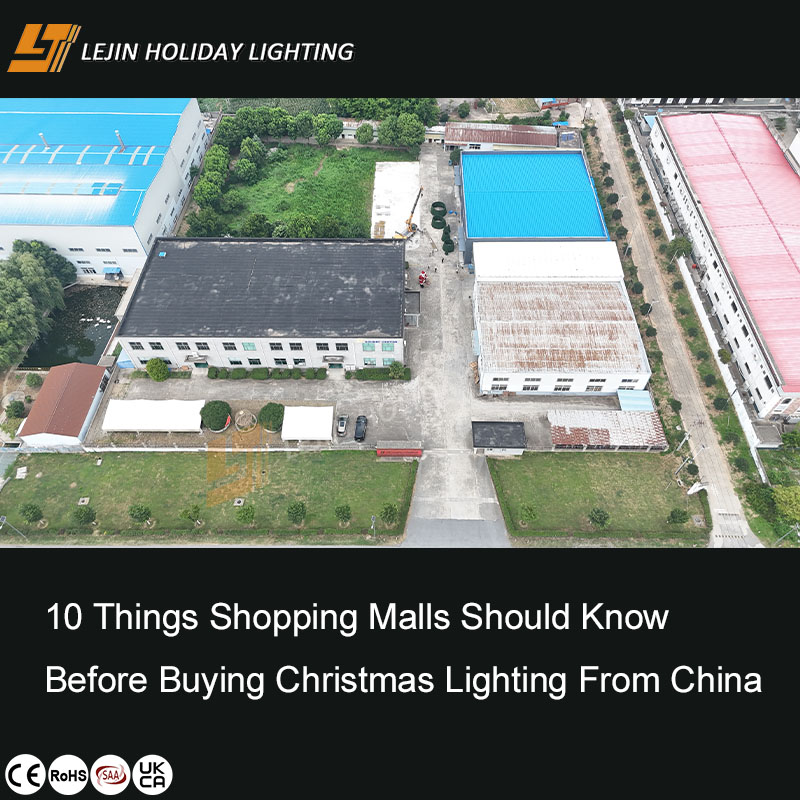
    10 Things Shopping Malls Should Know Before Buying Christmas Lighting From China
    Aug 13, 2026
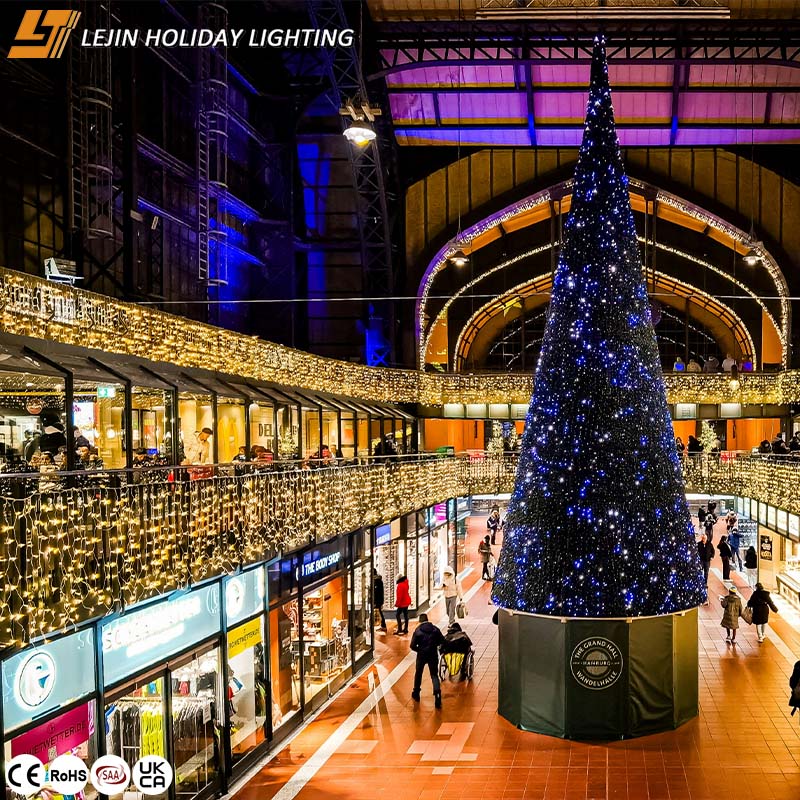
    Purchasing Christmas lighting for a shopping mall is fundamentally different from regular retail procurement. It's a significant investment that directly shapes customer experience and dwell time during the most critical season of the year. Yet, every year, malls run into the same avoidable problems: lights failing before Christmas, containers held at customs due to incomplete documentation, and installations that don't fit the space. These issues can be prevented — with the right planning and the right supplier.   1. Start Early – Timing Is Everything Mall lighting projects should begin at least 6 months in advance, with orders finalized 4 months before installation. Custom-shaped displays require weeks of design iteration, production takes 6–12 weeks, shipping 2–6 weeks, and on-site installation 1–3 weeks. Starting late means rushed shipping fees, limited design choices, or compromised quality. This isn't a problem that "working faster" can fix.    2. Verify Certifications – Don't Just Compare Prices CE, RoHS, SAA – these certifications are non-negotiable for customs clearance and legal installation. The key question: can your supplier provide batch-specific test reports, not just a one-off sample certificate? And is the IP waterproof rating suitable for outdoor use (at least IP65)? For LEJIN, providing batch-specific compliance documents is standard practice before every shipment leaves our factory. (Click)   3. Look Beyond Renderings – Ask for Real Case Photos 3D renderings and catalogs can be impressive, but they don't prove manufacturing quality. Ask for real photos and videos – not studio shots, but actual installations in real venues. For large projects, consider a physical factory visit or a video tour. LEJIN clients are welcome to schedule virtual or on-site factory tours – production lines, warehouses, and testing areas are open for viewing upon request. (Click)   4. Factor in Installation and Maintenance Costs Many buyers focus only on the product cost, overlooking installation and ongoing maintenance. Ask your supplier: do they provide installation manuals, wiring diagrams, or remote technical support? LEJIN includes printed installation manuals with every shipment, and digital copies are available in advance. For large projects, our engineering team can provide remote guidance. Selling the lights is just the first step — making sure they get installed properly is what matters.   5. Check Customization Details – Size, Shipping, and Assembly For custom shaped lights, confirm these details: Does the size fit your venue? Can the structure be broken down into modules for shipping (standard container height is 8.5 ft)? How many people and how many days are needed for on-site assembly? LEJIN confirms all these parameters at the design stage – ensuring customs fit, container compatibility, and a clear assembly plan. From design to delivery to installation, we make sure the lights arrive ready to be installed. (Click)   6. Evaluate Production Capacity – It Determines Whether Your Order Ships on Time Capacity isn't just about factory size. It comes down to three things: Are core materials pre-stocked to avoid peak-season shortages? Do large projects get dedicated production lines? Has the supplier experienced delays during past peak seasons? At LEJIN, we maintain year-round stock of core materials – copper wire, LED chips, and drivers – so we're never caught short when demand surges. Large projects are assigned exclusive production lines. And in the past three peak seasons, we've had zero delays caused by capacity issues. (Click)   7. Logistics and Customs Clearance – What Support Does the Supplier Offer? International shipping involves more than loading a container. Ask: Does the supplier assist with customs documentation? Are packaging options available for sea or air freight (shockproof, moisture-proof)? Can they coordinate multiple shipping methods? These details directly affect whether your goods arrive on time. LEJIN's packaging and logistics planning begin at the order confirmation stage – shockproof packaging, customs documents, and transport coordination are all arranged before shipment.   8. Waterproofing and Durability – Get the Details Right Mall lights hang outdoors from November through January, exposed to rain, snow, high winds, and coastal salt spray. Ask for three key specifications: IP waterproof rating (IP65 minimum for outdoor use), wind resistance (with test data available), and LED chip brand and warranty period. LEJIN provides waterproof test records for every batch, structural strength reports for wind resistance, and clear warranty details in every shipment – so clients always have the answers they need. (Click)   9. Check the Supplier's Track Record – Not Just Their Website Description Use B2B platforms or third-party tools to verify: on-time delivery rate (95%+ is ideal), response time (within 1-3 hours indicates a professional team), and repeat customer rate (30%+ suggests strong satisfaction). These data points tell you more than any marketing copy.   10. Request Samples – Don't Skip This Step Before mass production, ask for a sample and test it yourself – verify that brightness, color temperature, and waterproofing match the specifications promised. For custom shaped lights, also request structural drawings and installation instructions to confirm that the design works for your site conditions.   If you're planning a Christmas lighting purchase for a shopping mall, LEJIN has been through all of these considerations – and solved them. From voltage compatibility to installation support, our team provides one-on-one procurement advice and technical assistance tailored to your venue. With 26 years of export experience, we know what mall clients care about most – and what they tend to overlook. Contact us. Your questions have answers.
    Read More

  • How Christmas Lights Are Made: Inside Our Complete Manufacturing Process
    How Christmas Lights Are Made: Inside Our Complete Manufacturing Process
    Jul 31, 2026
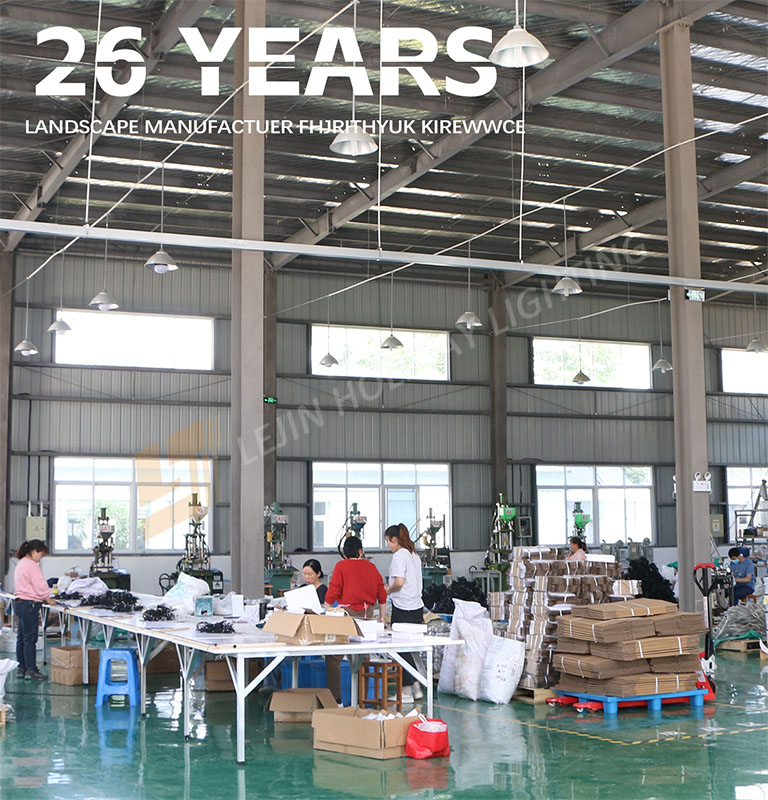
        Behind every box of decorative lights our clients receive is a complete production process. From raw material intake to finished goods shipment, every step along the way ultimately reflects in the quality of the product.     Raw Materials – It Starts with Material Selection The first step of every production run is confirming that all materials are in place. LEJIN's core materials include pure rubber wire, copper wire, LED chips, PVC materials, and more. Each batch of incoming materials undergoes incoming inspection – checking whether copper wire diameter meets specifications, whether rubber wire complies with standards, and whether LED brightness and color temperature are consistent. Only materials that pass inspection enter the production line, eliminating quality risks at the source.     LED Soldering and Light Source Module Processing This is the core step that determines the lifespan and stability of the lights. LED chips are soldered onto circuit boards or string light wires – the soldering process directly affects conductivity and heat dissipation performance. After soldering, each light board or string section undergoes a power-on test to confirm all LEDs are lit, with no dead LEDs or flickering, before moving to the next step.     Assembly – Turning Components into Complete Lights The assembly stage combines soldered light strings, wires, connectors, controllers, and other components into finished decorative light products. This phase includes soldering or crimping LED leads to main wires, installing waterproof connectors, and assembling motif light structural frames. For motif lights, the metal skeleton is finally assembled and secured at this stage. After assembly, each product undergoes visual and structural inspection to confirm secure connectors, undamaged wires, and complete shape integrity.     Testing and Packaging – The Final Check Before Shipment Testing is the core of LEJIN's quality control system. Every batch must pass multiple quality inspections before shipment, including but not limited to aging tests, waterproof tests, salt spray tests, and UV aging tests. Only products that pass all tests proceed to packaging. Packaging solutions vary by product type and shipping method – from shockproof foam wrapping to reinforced cartons or detachable wooden crates. A final inspection is conducted before packaging to confirm flawless appearance, complete accessories, and correct labeling. Items are sorted by type inside containers to ensure safe transit. At this point, a batch of goods has completed the full journey from raw materials to finished products, ready for delivery.
    Read More
  • Coastal Project Lighting Guide: How to Choose the Right Wire for Durability?
    Coastal Project Lighting Guide: How to Choose the Right Wire for Durability?
    Jul 15, 2026
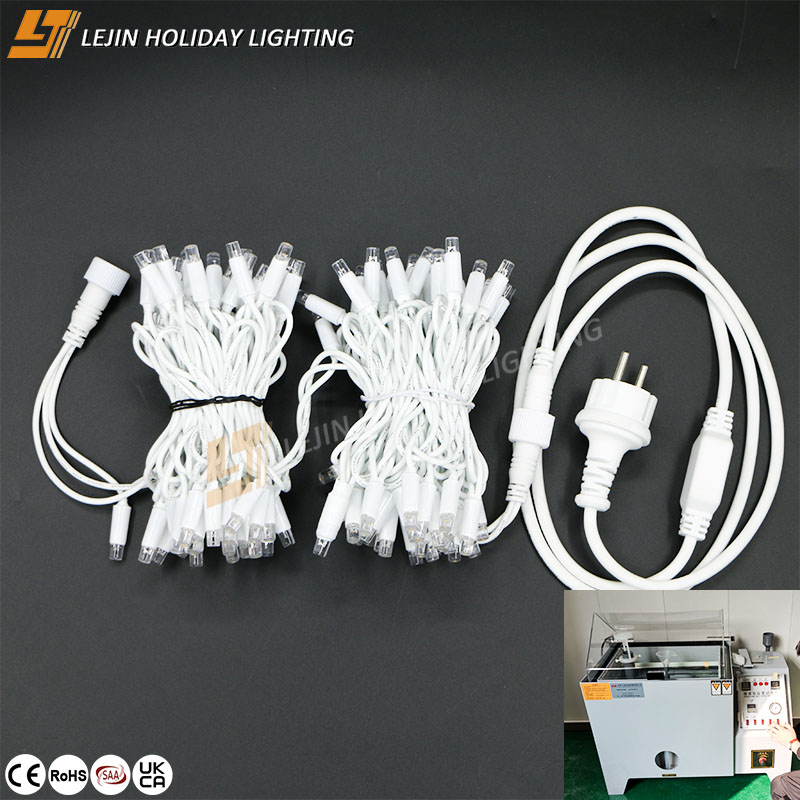
        Salt spray testing is specifically designed to verify the corrosion resistance and performance stability of rubber wires, LED solder joints, metal connectors, and other components under salt-laden coastal environments. For decorative lighting in coastal cities and island resorts, buyers often worry about brightness and waterproofing. But the part that fails first is almost always the wire — the outer jacket hardens, cracks, and loses its flexibility, exposing internal conductors to salt air and rapid oxidation, eventually taking down the entire string. The LEDs may still light up, but the wire is already done. In coastal installations, wire material determines how long decorative lights will last.   Why PVC Wire Doesn't Work Many decorative lights use PVC wire to keep costs down. PVC is cheap and easy to process, but it has a fatal weakness: poor salt spray resistance. In high-salt coastal environments, PVC wire gradually hardens, loses flexibility, develops micro-cracks on the surface, and eventually cracks and peels. According to salt spray test data for cable sheathing materials, PVC's corrosion resistance in salt spray environments typically lasts only 240–480 hours. In a standard coastal project, light strings with PVC wire may start showing signs of hardening and cracking within months — and soon require full replacement.     Why Blended Rubber Wire Isn't Good Enough Either Some manufacturers blend other materials into the rubber to cut costs, calling it "rubber wire" when it's actually a mixed-material compound. These wires look and feel like rubber, but the problem shows up in salt spray environments. Different materials have different thermal expansion coefficients, making them prone to delamination and separation under temperature changes. Chloride ions penetrate more easily through the interfaces between materials. In simple terms, blended wire will develop internal delamination cracks over time, and its lifespan falls far short of pure rubber wire.     The Advantage of 100% Pure Rubber Wire Pure rubber wire can withstand long-term salt spray attack. 100% pure rubber wire has a uniform composition with high density, making it difficult for chloride ions to penetrate. In coastal environments, pure rubber wire maintains its flexibility and integrity — it won't harden, crack, or peel. LEJIN insists on using 100% pure rubber wire, without blending any other materials to reduce costs. Verified by salt spray testing, LEJIN's rubber light strings remain in excellent condition even after extended use in coastal environments, with the outer jacket staying intact — this is the wire that coastal projects should choose.   The biggest hidden cost of installing themed ornamental lights along the coast isn't the lights themselves, but the repeated labor and downtime caused by wire aging and replacement. PVC wire can't withstand salt spray. Blended rubber wire won't last. Only 100% pure rubber wire is the right choice for coastal projects. LEJIN guarantees that every batch of rubber light strings uses 100% pure rubber wire and has passed salt spray testing before shipment. If you'd like to learn more about LEJIN's test data or are selecting lights for a coastal project, feel free to contact us.
    Read More
  • Outdoor Decorative Lights Easy to Fail? LEJIN's 5 Rigorous Environmental Tests — Withstanding Any Weather
    Outdoor Decorative Lights Easy to Fail? LEJIN's 5 Rigorous Environmental Tests — Withstanding Any Weather
    Jun 16, 2026
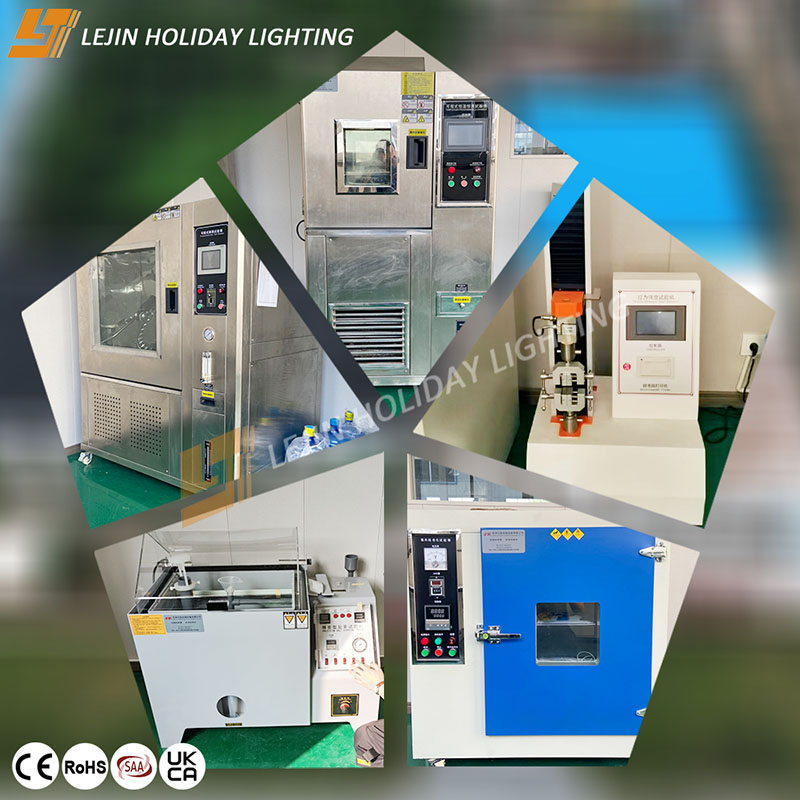
        Many customers only care about whether decorative lights turn on. But what really determines their performance is whether they stay on — and for how long — under different conditions. Outdoor decorative lights face real challenges: summer heat, winter freezing, heavy rain, coastal salt spray, and long-term UV exposure. Before leaving our factory, every LEJIN decorative light product goes through five tests: High & Low Temperature Test, Rain Test, Salt Spray Test, UV Aging Test, and Pull Test.   1. High and Low Temperature Test We place light strings in a temperature chamber and operate them continuously at temperatures ranging from -40°C to 70°C to check their performance under extreme heat and cold. Summer ground temperatures can exceed 40°C — decorative light strings hang outdoors from morning to night. In northern regions, winter temperatures drop to -20°C or lower — wires become stiff, solder joints become brittle. Through this test, we ensure decorative lights work properly whether they're shipped to tropical or freezing regions — starting up reliably, maintaining stable brightness, with no material deformation or cracking. No "heat stroke," no "freeze-up."     2. Rain Test Outdoor festival lights face rainy seasons, typhoons, and humid weather. We spray products with water according to IP44 and above waterproof standards, simulating different angles and intensities of rainfall. String lights, connectors, and controllers — water intrusion anywhere can cause short circuits, electrical leakage, or complete failure of the entire festival light string. Through the rain test, we ensure festival light strings stay on during heavy rain — connectors stay dry, controllers stay safe.     3. Salt Spray Test Coastal cities, beach resorts, and harbor commercial areas have high salt content in the air. Ordinary metals rust within days. We place decorative festival lights in a salt spray chamber for hours or days to observe corrosion on metal parts, solder joints, and screws. Rusted screws mean decorative lights fall. Rusted solder joints mean decorative lights fail. Through the salt spray test, we ensure decorative light products don't rust quickly in coastal environments — installed once, they stay put, able to withstand sea breezes.     4. UV Aging Test Outdoor decorative lights are exposed to sunlight for years. Wires, housings, and lenses slowly age — yellowing, becoming brittle, even cracking. We use a UV aging chamber to simulate long-term sun exposure, accelerating the aging process to check material performance changes. Yellowing is a cosmetic issue. Cracking leads to water ingress and failure. Through the UV aging test, we ensure decorative light products remain in good condition after years of outdoor use.     5. Pull Test This is a test many customers don't think about — but it's one of the most common pain points during actual installation. Workers pull wires when hanging string lights and drag strings during setup — these actions create tension on the connections between wires, plugs, and sockets. If solder joints are weak or crimps are loose, wires can pull out, leading to poor contact or lights not working. In worse cases, it can cause short circuits, overheating, and safety hazards. We use professional pull testing equipment to apply standard-specified tension to power cords and connection points — ensuring every wire is properly soldered, securely crimped, and able to withstand pulling force.     LEJIN decorative lights must pass these tests before shipment: temperature, waterproofing, corrosion resistance, UV aging, and pull strength. Each test is not a formality. It's a real quality threshold. We don't promise "never fails." But we promise this: every batch of decorative lights that leaves our factory has gone through these tests.
    Read More
  • For Urgent Orders, Can Quality & Deadline Really Be Both Guaranteed?
    For Urgent Orders, Can Quality & Deadline Really Be Both Guaranteed?
    Apr 16, 2026
      In the global holiday decorative lighting industry, urgent orders and tight deadlines are common demands. For professional lighting manufacturers, stable and efficient urgent order delivery capability has become a core indicator of measuring comprehensive competitiveness. With 26 years of industry experience, Lejin has built a mature urgent order delivery system, which can accurately respond to various urgent needs, balance efficiency and quality, and solve the construction period problems for global customers.   1. Efficient Response Mechanism for Urgent Orders Lejin has established a complete rapid response system for urgent orders. From order confirmation to production scheduling, a dedicated green channel is opened throughout the process to greatly shorten the internal approval and communication cycles. A professional project team conducts rapid evaluation of order requirements, clarifies product specifications, structural complexity and delivery time limits, ensuring that festival decorative lighting arrangements are launched in the shortest possible time and avoiding delays due to cumbersome processes.     2. Flexible Production and Scheduling Capacity The factory adopts a scientific production scheduling management model, which can reasonably insert urgent orders without affecting the delivery of regular orders. The combination of skilled technicians and mature christmas lighting processes ensures that production efficiency is significantly improved under the premise of stable quality. Key processes can further shorten the production cycle by adding shifts to meet the needs of urgent delivery.     3. Strict Quality Control in Expedited Production Even for urgent orders, our quality control is never relaxed. Every product like motif lights must go through a complete testing process, including waterproof testing, salt spray testing and UV resistance testing. From raw material inspection to component processing, assembly and wiring, every link follows unified standards. We ensure that expedited production will not bring quality risks, and only fully qualified finished products can enter the packaging and delivery links.     4. Reliable Logistics and On-Time Delivery Guarantee To match the efficient smart decoration light capacity, Lejin has established long-term and stable cooperative relations with international logistics providers. According to different regions and delivery time limits, it provides targeted logistics solutions, including priority booking, fast customs clearance, standardized packaging and other services. The entire delivery process is fully traceable, ensuring that urgent orders can be delivered safely and on time, accurately matching the customer's project schedule.     Lejin Lighting's urgent order delivery capability stems from 26 years of industry accumulation and systematic management. It can not only quickly respond to various urgent needs, but also adhere to the quality bottom line, becoming a reliable partner for global customers under tight construction periods.
    Read More

leave a message

leave a message
If you are interested in our products and want to know more details,please leave a message here,we will reply you as soon as we can.
submit

home

products

WhatsApp

contact