What Are You Looking For?
Follow Us On:


Two decorative lights may look similar, but their prices can be quite different, and their lifespans even more so — this is a problem many buyers have encountered. The reason is simple: the differences between good lights and bad lights are hidden where you can't see.
1. Wire
The wire is the "blood vessel" of a light string, consisting of an outer jacket and an inner core. Each layer determines quality.
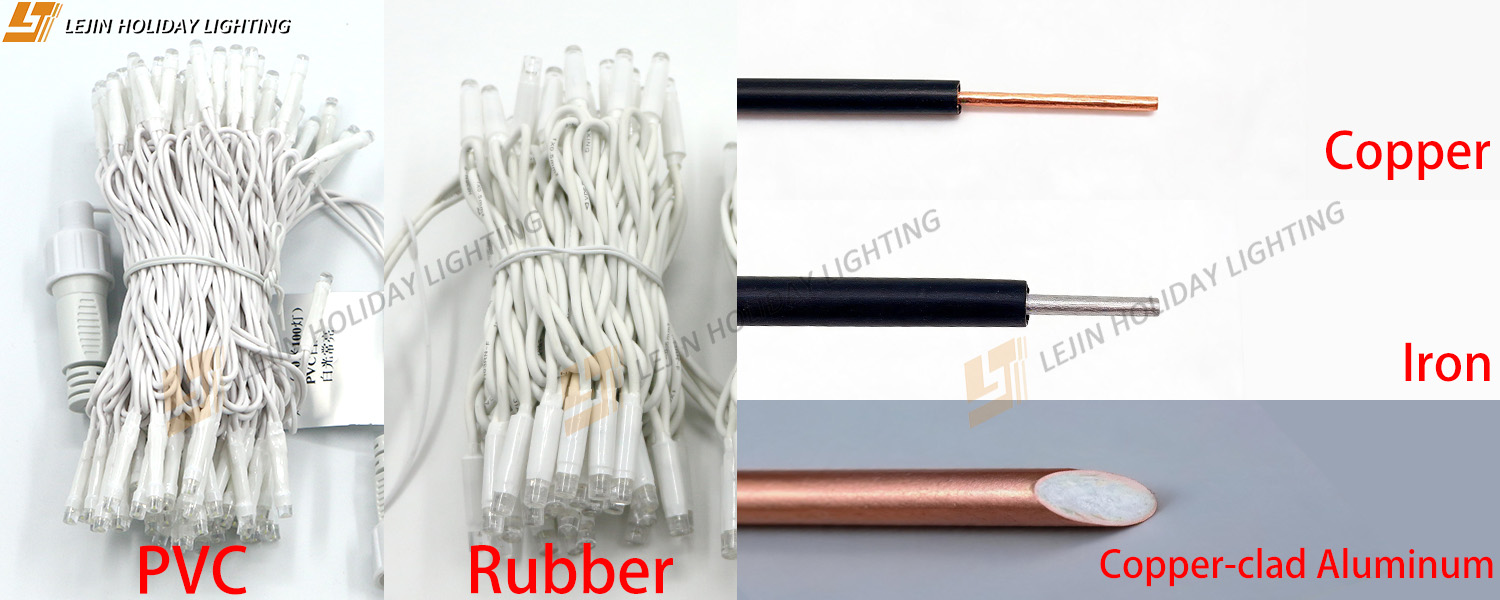
·Outer jacket: Rubber wire is aging-resistant and has good waterproof performance. PVC wire is cheaper, but it hardens and cracks easily at low temperatures, posing greater risks for long-term outdoor use. For outdoor projects, rubber wire must be the first choice.
·Inner core: The thicker the copper wire, the better the conductivity. The thinner the copper wire, the higher the resistance — when multiple sets are connected in series, the lights at the end will become noticeably dimmer. Small projects may not show the difference, but when it comes to large projects requiring long-distance connections, the problem becomes exposed.
What's more critical is that some manufacturers use copper-clad aluminum or even iron core instead of pure copper. These wires conduct poorly, generate more heat, cause faster brightness loss, and pose safety risks. How to check: Cut the wire and look at the color — pure copper is reddish; copper-clad aluminum looks whitish; iron core looks grey.
2. LED Chip and Flat Cap
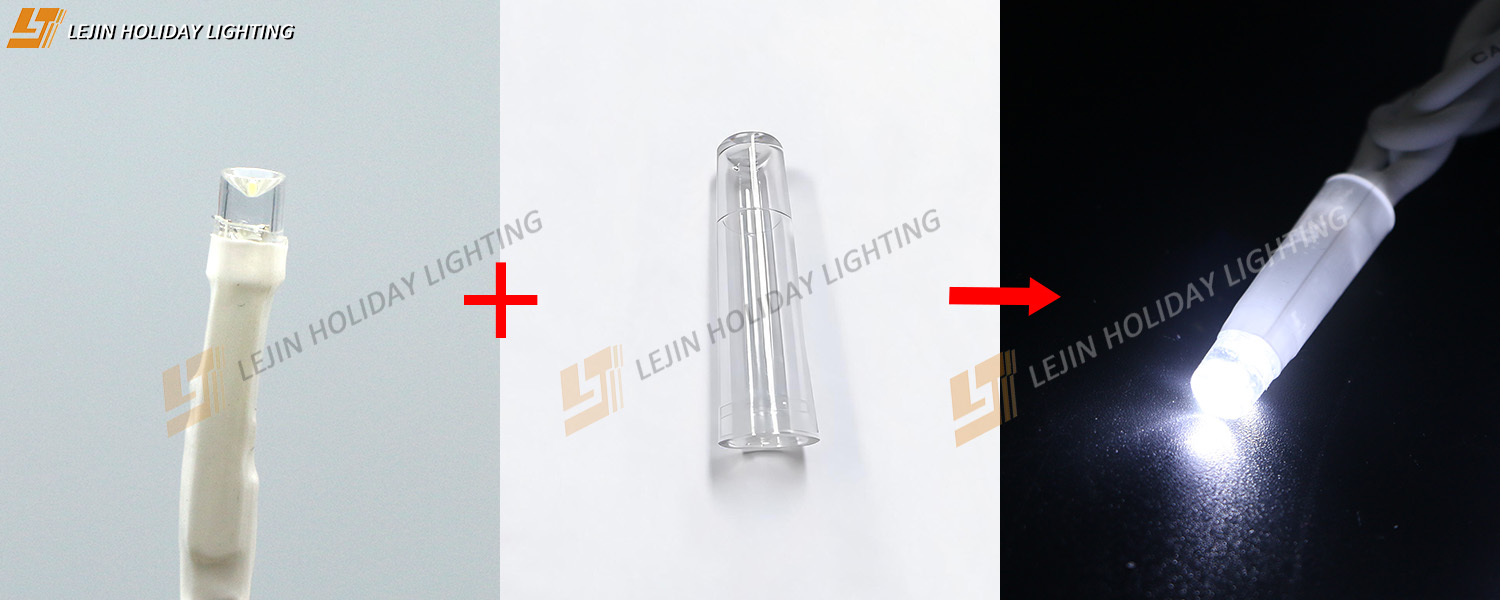
The LED chip is the heart of the light, and the flat cap is its armor. Together, they determine the lifespan.
·LED chip: Good chips maintain stable brightness even after 50,000 hours of continuous operation. Poor chips start dimming within days or weeks.
·Flat cap: The flat cap is a transparent protective shell around the chip, making it less likely to be damaged during transport and installation. Lights without a flat cap are exposed and fragile — they break easily if dropped, and can be damaged with just a little too much force during installation. Transportation and on-site installation inevitably involve bumps and drops, so holiday lightings with a flat cap are more durable.
3. Testing
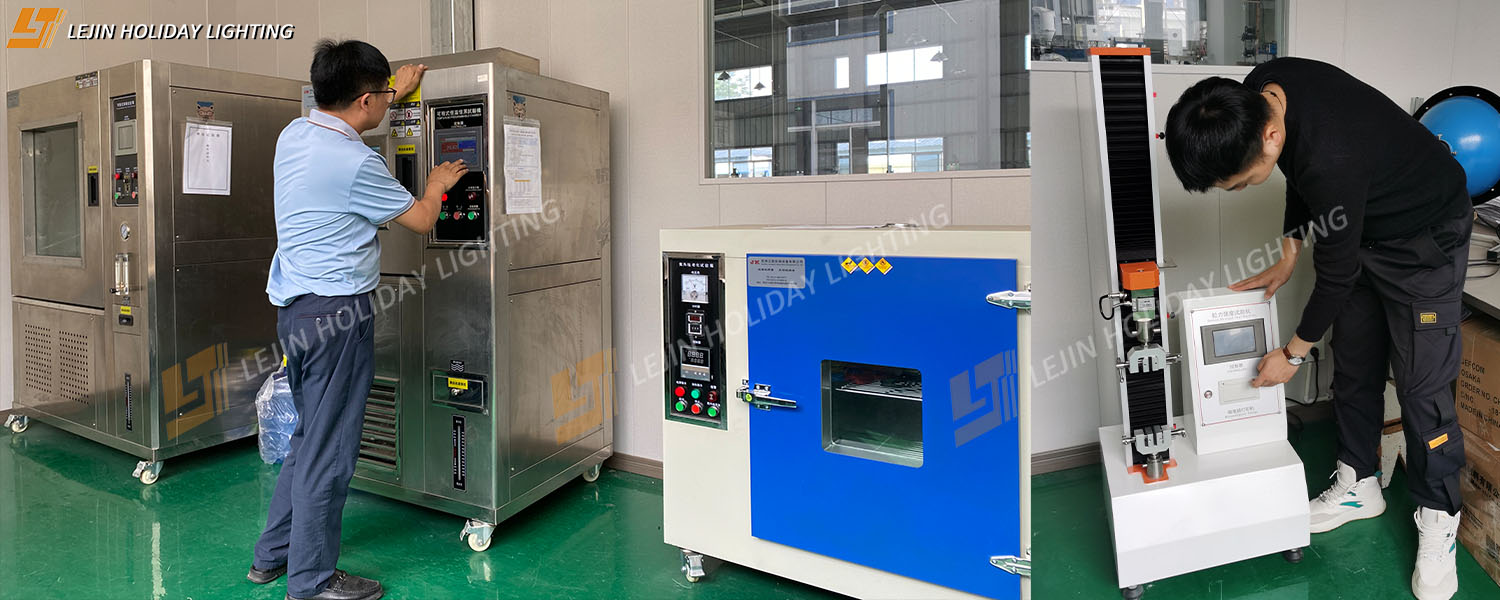
Good factories test every set of Christmas lights with machines before shipment — problems are caught and solved inside the factory. Poor factories simply light them up briefly before shipping, leaving problems to be discovered by the customer. LEJIN tests every set of Christmas lights with machines — waterproof tests, UV tests, high and low temperature tests, and more. Before each batch of decorative lights leaves the factory, samples are kept and continuously powered on for long periods to monitor brightness decay, ensuring that every product reaches the customer in perfect condition.
Good festival lights cost a bit more, but they last longer and cause fewer problems. Cheap festival lights save money upfront, but repairs and replacements cost more in the long run. LEJIN's promise is simple: We never cut corners or ship defective products. From wire to LED chips, from lens covers to testing, every light string is built to standards and inspected properly. Good quality isn't a slogan — it's delivered through every detail. We'll back our products with proof — and support you in making every project a success.



 IPv6 network supported